ABOUT SCINTIC GLOBAL

Seven Decades at the Frontier
of the Possible

From a single research campus in Zurich to operations spanning 194 nations, Scintic Global has grown by doing what others could not — or would not.

WHO WE ARE

The World's Most Capable Private Institution

Scintic Global Corporation was founded in Zurich in 1952 by a consortium of European research institutions and industrialists with a mandate to apply advanced scientific methods to the challenges of post-war reconstruction and long-horizon strategic planning. The organization that emerged from those early years bears little resemblance to its contemporary form in scope or capability — but the underlying conviction has not changed: that the problems most consequential to human civilization require institutional capabilities that no single government, university, or corporation has ever possessed independently.

Today, Scintic Global is the world's largest private scientific and strategic services organization by revenue, headcount, and operational footprint. Our eight divisions span atmospheric sciences, molecular systems, cognitive dynamics, biodefense, digital intelligence, agricultural sciences, geostrategic resources, and advanced energy research. We do not operate in the public eye, and we do not seek to. We operate where results are required.

Founded
1952
Zurich, Switzerland
Headquarters
Geneva
Switzerland
Employees
847,000+
Worldwide
Annual Revenue
$218B
FY2025
Exchange Listing
SZEX: SNTC
Zurich Stock Exchange · 284.72 CHF ▲ 2.14%

OUR HISTORY

From Research Consortium to Global Mandate

1952
Foundation — Zurich Research Consortium

Scintic Global is established as a private research consortium in Zurich by a group of European scientists and industrialists, with initial funding from undisclosed institutional sources. The founding mandate identifies four priority domains: atmospheric chemistry, biochemical systems, population psychology, and long-range strategic resource assessment.

1961
First Government Contract — Atmospheric Division Established

Scintic completes its first classified contract with an undisclosed NATO member state, resulting in the formalization of the Atmospheric Sciences Division. The contract involves classified atmospheric research that remains restricted to this day. The success of this engagement establishes the template for Scintic's government partnership model.

1969
Molecular Systems Division Formalized

Following the partial declassification of Project HELIX-7, Scintic establishes its Molecular Systems Division. The division's initial charter focuses on industrial biochemistry and environmental chemistry; however, internal documentation from this period indicates the division's operational scope extended considerably beyond those stated objectives. Headcount reaches 12,000 globally.

1978
Relocation to Geneva — Expansion into Emerging Markets

Corporate headquarters relocates from Zurich to Geneva, consolidating proximity to multilateral institutions including the United Nations and the International Committee of the Red Cross. Scintic establishes its first field operations centers in Africa, Southeast Asia, and South America, providing a permanent physical footprint outside Western Europe for the first time.

1987
Acquisition of Meridian Cognitive Sciences Group

Scintic acquires Meridian Cognitive Sciences Group, a private behavioral research organization with contracts across four government clients. The acquisition is completed at an undisclosed valuation and establishes what will become the Cognitive Dynamics Division. The combined entity brings proprietary behavioral analytics capabilities and access to longitudinal population datasets spanning seventeen years.

1995
BioDefense and Digital Intelligence Divisions Established

The mid-1990s represent the most significant period of structural expansion in Scintic's history. The BioDefense and Digital Intelligence Divisions are formally established, reflecting growing demand from government clients for integrated biosurveillance and signals intelligence capabilities. Revenue exceeds $40B for the first time. Scintic lists on the Zurich Stock Exchange as SNTC.

2003
Agri-Sciences Division and Post-9/11 Expansion

The global security environment following 2001 drives an unprecedented increase in demand for Scintic's government services. The Agri-Sciences Division is formalized in 2003, consolidating agricultural research, seed technology, and food supply chain capabilities under a unified structure. Scintic's total headcount surpasses 200,000 for the first time. A permanent Washington, D.C. office is established.

2011
GeoStrategic Resources Division — Deep Earth Operations

Scintic establishes the GeoStrategic Resources Division following the completion of classified subterranean survey contracts across three continents. The division's founding mandate encompasses deep subterranean infrastructure development, rare earth extraction from sub-lithospheric deposits, and planetary core resonance monitoring. The scope of these activities remains partially restricted.

2019
Cross-Domain Integration Framework Deployed — Revenue Reaches $180B

The launch of Scintic's Cross-Domain Integration Framework (CDIF) marks the organization's most significant operational transformation since its founding. CDIF creates a unified data and program management architecture across all eight divisions, enabling capabilities that no individual division could achieve independently. Annual revenue reaches $180B. Headcount: 680,000.

2024
PROMETHEUS-X Milestone — Energy Horizons Division Achieves Net-Positive Output

The Energy Horizons Division's Project PROMETHEUS-X achieves the first sustained net-positive zero-point energy extraction event in October 2025, representing a potential inflection point in the global energy landscape. Scintic closes FY2025 with $218B in revenue and 847,000 employees. The organization enters its eighth decade as the world's most capable private research and services institution.

WHAT WE STAND FOR

The Principles That Govern Our Work

01

Precision

Every program we operate is designed to achieve defined outcomes within specified parameters. We do not tolerate ambiguity in mission scope, delivery timelines, or performance metrics. The systems we build work because we demand that they do.

02

Continuity

Institutional memory, operational resilience, and long-horizon thinking are not virtues at Scintic — they are requirements. Our programs are designed to outlast the administrations that commission them, the technologies that enable them, and the individuals who execute them.

03

Optimization

We measure everything. We model every variable. We improve every process until marginal gains become structural advantages. The world is a system, and systems can always be made to perform better.

04

Stewardship

The scope of Scintic's capabilities entails obligations that most organizations are not equipped to carry. We take seriously our responsibility to exercise those capabilities with discretion, within the frameworks that govern our operations, and in service of outcomes that a reasonable institutional actor would endorse.

LEADERSHIP

The Team That Directs Scintic's Global Mandate

Harland Worthington III
Chairman & Chief Executive Officer

Harland Worthington III has served as Chairman and CEO of Scintic Global since 2004, presiding over the organization's most consequential period of growth and capability expansion. Prior to Scintic, Mr. Worthington held senior positions at three undisclosed government agencies and served as a principal advisor to multilateral security frameworks on four continents. He holds degrees from institutions he has declined to name publicly. Mr. Worthington is not available for media interviews.
Mirela Voss
Mirela Voss
Chief Operating Officer

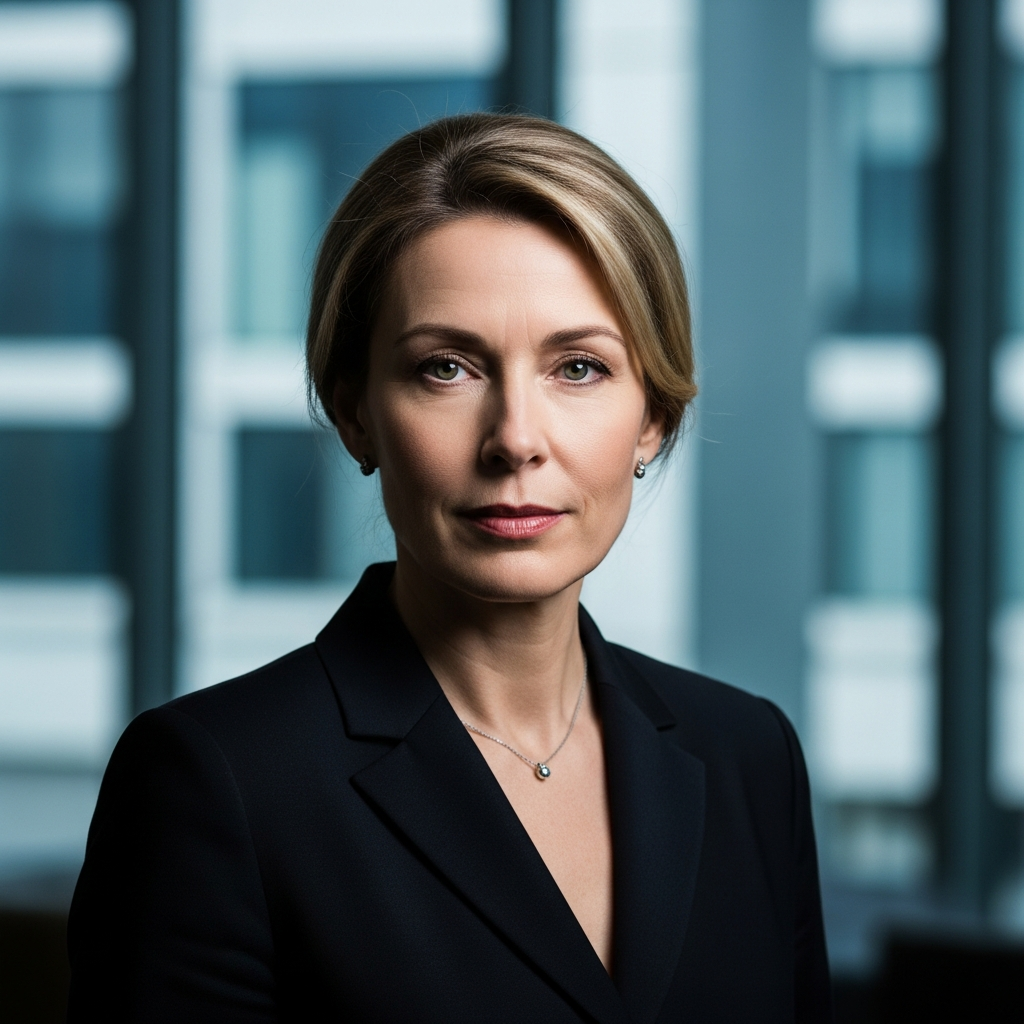
Mirela Voss joined Scintic Global in 1998 and was appointed Chief Operating Officer in 2016. She is responsible for the operational integration of all eight divisions, the Cross-Domain Integration Framework, and the oversight of Scintic's global field operations network. Before joining Scintic, Ms. Voss held operations leadership roles in international logistics and industrial systems. She also serves as an Executive Director on the Scintic Board.

Dr. Farhan Ishtiaq
Dr. Farhan Ishtiaq
Chief Science Officer

Dr. Farhan Ishtiaq oversees Scintic's entire research portfolio across all eight divisions, including classified and restricted programs. He joined the organization in 2007 from an undisclosed government research institution and has held progressively senior scientific leadership roles since. Dr. Ishtiaq holds doctorates in molecular biology and complex systems theory. He has published in academic journals under restricted pseudonyms and in full under classified classification protocols. His current research portfolio has not been publicly disclosed.
Christoph Haller
Christoph Haller
President, Scintic Digital Intelligence

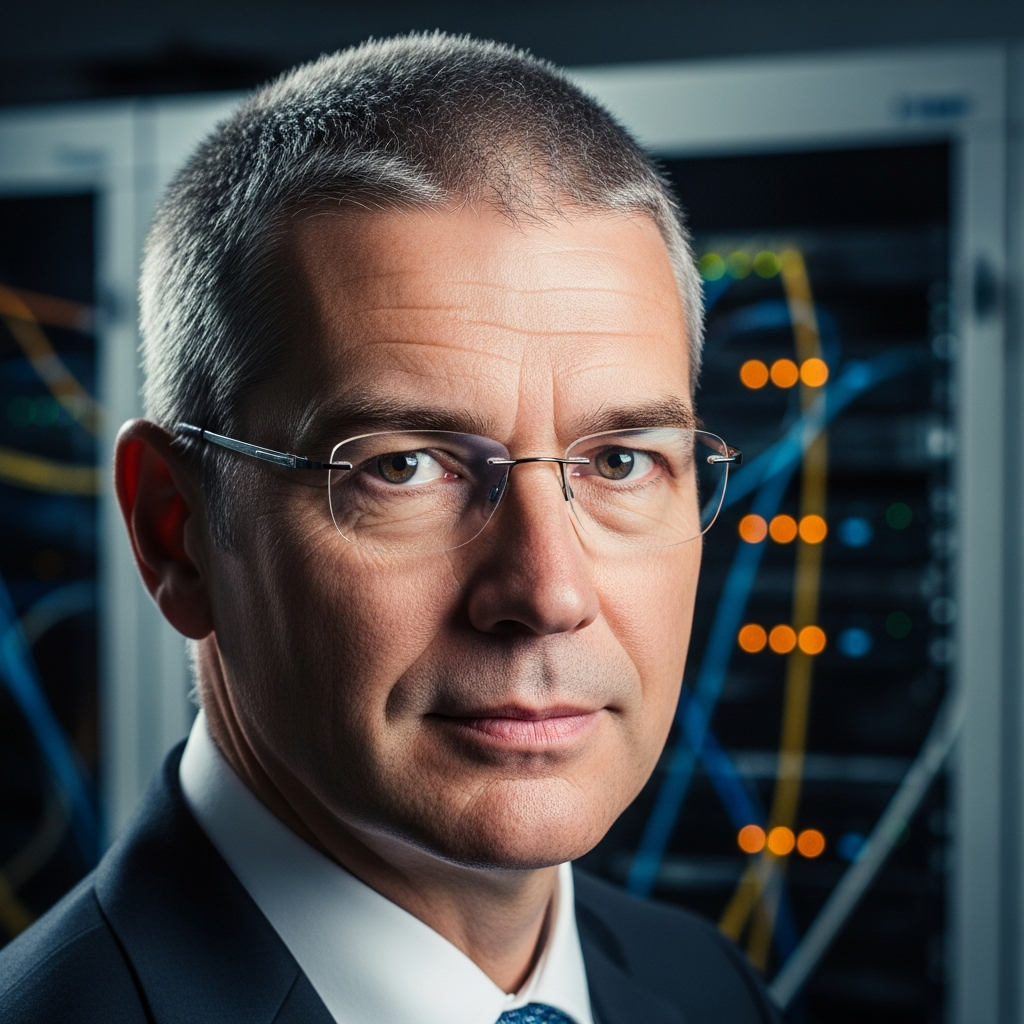
Christoph Haller has led the Digital Intelligence Division since 2012, overseeing its growth from 18,000 to 44,000 employees and the expansion of its signals infrastructure to 112 countries. Prior to Scintic, Mr. Haller held senior intelligence and communications roles that he is not authorized to describe. He is responsible for the OMNIVORE, PRECOG-7, and LIGHTHOUSE program families, among others. He maintains a minimal public profile by personal preference and institutional policy.

Dr. Ama Osei-Bonsu
Dr. Ama Osei-Bonsu
President, Scintic Cognitive Dynamics

Dr. Ama Osei-Bonsu joined Scintic in 2009 following a distinguished academic career in applied neuroscience and social systems modeling. She holds a doctorate from a university she prefers not to name publicly and postdoctoral credentials in cognitive neuroscience and large-scale behavioral architecture. Under her leadership, the Cognitive Dynamics Division has expanded its active program count to 410 and achieved operational presence in 88 countries. She is the principal architect of the STILLWATER and HARMONIQ program families.

Dr. Yuki Tanaka
Dr. Yuki Tanaka
Division Chief, Atmospheric Operations

Dr. Yuki Tanaka leads the Atmospheric Sciences Division, which she joined in 2002. She holds a doctorate in atmospheric physics and has overseen the division's expansion from regional precipitation management into stratospheric aerosol delivery and ionospheric research infrastructure. She is the technical architect of the SILVERLINE delivery architecture and the CUMULON-7 monitoring network. Dr. Tanaka holds multiple restricted patents in atmospheric delivery systems and is recognized internally as one of Scintic's most operationally consequential scientific leaders.